Archives For Pulse post

Integrity at Work

August 14, 2018
Integrity at Work
I prefer to be true to myself, even at the hazard of incurring the ridicule of others, rather than to be false, and to incur my own abhorrence.” – Frederick Douglass 
 
Famed 19th-century author and orator Frederick Douglass was an eminent human rights leader in the anti-slavery movement and the first African-American citizen to hold a high U.S. government rank.Frederick Douglass was born into slavery around 1818 in Talbot County, Maryland. He became a famous intellectual, advising presidents and lecturing to thousands on varied causes, including women’s rights and Irish home rule. Frederick Douglass has integrity. Integrity is the quality of being honest, having strong moral principles, and holding one’s self to consistent standards. In ethics, integrity is regarded as the honesty and truthfulness or accuracy of one’s actions.

Consistency is a choice we make. If you just had an argument with someone before walking into your next meeting, consistency means you will make a conscious choice to shift gears and release yourself from the negativity of the last conversation, not bring that to the next meeting.

Honesty and accuracy of one’s actions requires intentionality and thought. Behaviors, actions, and words should be honest, accurate.

Integrity stems from the Latin word ‘integer’ which means whole and complete. So integrity requires an inner sense of ‘wholeness’ and consistency of character. When you are in integrity, people should be able to visibly see it through your actions, words, decisions, methods, and outcomes. 

A person who has integrity is the same authentic person regardless of the situation. You can meet this person with family, friends, at athletic events, or boardroom meetings, and see a consistency in behavior, actions, and words.

Integrity is one of the fundamental values employers seek in employees. Integrity is the foundation on which coworkers build relationships, trust, and effective interpersonal relationships.

Integrity at Work

Integrity in the workplace fosters a positive workplace culture. One where there is open communication, good decision making, and a strong moral compass guiding all decisions and actions.

If you are known for your integrity, you will gain trust and respect from the people around you. People want to deal with an individual or organization that can be trusted to follow through with what they have agreed upon. To strengthen integrity, read on.

– Know yourself. Clarify your needs, values, skills and goals. Ensure that these are not reflections of others’ expectations. 

– Be Authentic. Be your genuine self all the time. Adhere to your purpose and goals.
 
– Build trusting, respectful relationships. Demonstrate you’re a team player who others can rely on. Communicate politely, honestly, and respect colleagues’ thoughts and ideas.
 
– Be honest. Encourage open communication between employers, employees, and co-workers. If you’re honest about dissatisfying aspects of your job, your employer may be able to improve the situation. Employers that are open about company policies and changes that affect the organization are more trustworthy from the employees’ perspective.
 
– Maintain confidentiality. In addition to facilitating integrity, confidentiality is a legal necessity. Employers and employees have an obligation to keep certain information private. Violation of privacy policies could lead to fines, penalties and possible lawsuits. Confidentiality instills trust and encourages sincere consideration of the privacy of others.
 
– Give and Take Credit. Accept credit for what you create, but also give credit where credit is due. Most productive, dedicated workers feel good about receiving praise or credit for their contributions.
 
– Value Time. Don’t waste anyone’s time. Be prompt for meetings and projects. Being late is a form of disrespect. Stick to deadlines, schedules, and arranged set-ups.
 
– Don’t Argue.  Don’t allow irrational emotional reactions to define the way you interact with the world. Learn how to disagree in a civil manner, and know when to just walk away. Do not send negative email messages or internet posts.
 
Give Second Chances. Grant others the benefit of the doubt. Don’t assume the worst. If you suspect someone of lying or cheating but they claim otherwise, trust them by giving a second chance.
 
– Adhere to the Golden Rule. The Golden Rule is a reflection of respect for others. Treating others the way you want to be treated is the core principle of the Golden Rule, and an example of integrity at work. Practicing the Golden Rule keeps offensive comments and other disturbances at bay.
 
– Follow company policies. Policies are designed to guide you as to the best practices. Avoid use of company’s equipment or resources for personal use.
 
– Work Diligently. Show enthusiasm and commitment to your work. Focus on job responsibilities.
 
– Apologize. Don’t allow foolish pride to take precedence over rationality. Learn to say, “I’m sorry.”  This may require being the bigger person and apologizing first.
 
–  Be Accountable. Ensure your word and actions are justified, and can be explained. Define and follow through on your word or promise.
 
– Admit to and learn from mistakes. Mistakes are part of the learning process. Correct them, and move on.
 
– Tune into your intuition. Write daily thoughts, feelings and hunches in your journal.  Attend to what you write and how you feel at the time. Note thoughts and feelings that emerge when you finish. Notice how intuitive hunches feel different from calculated ones. Take at least five minutes of quiet time every day to listen to your intuition.
 
– Lead by ExampleWhen individuals lead by example, they set the foundation for appropriate workplace behavior. Leading by example improves personal awareness, sensitivity to others, and accountability.
 
Demonstrate Humility. Don’t brag or show off what you have or have accomplished. Feel good about your accomplishments, then strive to become better.  
 
– Strengthen Altruism. Enjoy enriching the lives of those around you, even if it means sacrificing some happiness in your own life for a while.
 
– Stand Up for Your Beliefs. Advocate what you think is the appropriate way of doing things, even if everyone else is acting differently. If you are asked to do something that’s not in harmony with your personal code of conduct, develop the courage to say no. Your integrity always keeps you on the right path. A person with integrity learns how to manage unethical or illegal temptations and winds up happier, healthier, stronger, and more successful personally and professionally.

Frederick Douglass and other folks who live with integrity are Questers.  They are described in the award winning, Questers Dare to Change Your Job and Life: https://www.amazon.com/Questers-Dare-Change-Your-Life/dp/1508408963

Share
Are These Your Job Search Challenges?
Have you ever been told you’re perfect for the job, then received a rejection letter? Has an employer said he’d call and failed to do so? Have you sent out several resumes and received no acknowledgments?
 
These and other job search challenges can be resolved by common sense, good timing, networking, research and confidence.  The following discusses common dilemmas and possible strategies for dealing with them. 
 
1. How will I know if an inside candidate is being considered for the job?Ask interviewers. Find out the candidate’s strengths, how her background compares to yours, whether the company favors inside candidates, and if so, how likely the insider will accept an offer. This will facilitate candid communication. Interviewers’ responses to questions will supply answers and enable you to develop an argument for your candidacy.
 
2. I was offered a position, pending budget approval and sign-off from a senior executive, and advised I would receive an offer within two weeks.  Five weeks and several unanswered phone messages later, I got the employer who coolly told me they still needed budget approval and the signature.
 
Write a letter indicating you’re open to renegotiation of the compensation package should there be a snag in budget allocation, and that you’d be happy to meet with his superior to expedite a decision. This will show you’re sensitive to the employer’s needs and are flexible about compensation. The employer will appreciate your patience and flexibility.
 
3. An interviewer said he’ll make a decision within two weeks, but it’s now three weeks and I haven’t been contacted. I have an impending offer from another company. What should I do?
 
It’s common for employers to procrastinate when making hiring decisions. Call your contact to determine whether a decision has been made.  Advise the company that you have an impending offer from another company, but prefer this organization. This shows you believed they’d contact you as promised, and since another company is competing for you, time is critical.
 
4. I left my job after personality conflicts with my supervisor. How do I approach this subject in interviews?
 
Don’t approach it. If the prospective employer asks why you left, say you need more challenge, or other. Try to maintain control over the interview. Focus on the prospective position. Anticipate and answer questions. Show why you want to work for the company. Confidently demonstrate how your accomplishments can contribute to the company’s bottom line. Ask relevant questions such as challenges the prospective employee will face, and examples of situations they’d like handled. Demonstrate how you’d resolve problems.
 
5. Are job websites effective ways to find jobs? I’ve sent resumes to several employers with no success.
 
Sending resumes over the internet is ineffective.  Few employers can respond to the thousands of people who answer ads. Research your desired jobs and companies. Know each company’s products and services; become conversant with recent developments in the industry. NETWORK.  Identify company contacts who can introduce you to decision makers. Get your resume to hiring managers. Follow-up contacts. If nobody responds, call or email again. Don’t take rejection personally.
 
6. A prospective employer called to schedule a phone interview. How can I prepare?
 
Employers usually call to schedule interviews. Take these seriously. Prepare. Dress professional, smile. Stand or sit tall. You’ll feel and speak professional.  Have your resume, other documents and paper handy to take notes and jot down questions. Prepare a loose script with key words and ideas you’d like to present. Write names and titles of everybody as you’re introduced. Listen attentively.
 
If an employer calls without a prearranged appointment, and you’re not prepared, excuse yourself politely and offer to return the call at a mutually convenient time. Follow-up with a thank you note.
 
Final suggestions
Never accept or decline a job offer on the spot. Show enthusiasm, but don’t commit. Thank the interviewer and ask for time to consider it. Don’t focus solely on what’s in it for you. Consider what you can contribute. Evaluate the offer thoroughly. Know how the position will use your skills and match needs and other important criteria. If a decision doesn’t feel right, request a deadline extension. Negotiate desired changes. Once you and the employer have agreed on everything, get the offer confirmed in writing.
Dr. Carole Kanchier, psychologist, coach, speaker, digital/newspaper columnist and author of award-winning, Questers Dare to Change Your Job  and Life, helps individuals and organizations dare to change. https://www.amazon.com/Questers-Dare-Change-Your-Life/dp/150840896.


Share
Are Attractive People More Successful?


Want some career advice? Look in the mirror. Appearance matters more than you think!

Numerous studies on variables related to getting, keeping and advancing on the job revealed that appearance and looking young gives workers the competitive advantage in the job market and workplace.

Noted economist, Daniel S. Hamermesh in his book, Beauty Pays: Why Attractive People Are More Successful, shows that the attractive are more likely to be employed, work more productively and profitably, receive more substantial pay, obtain loan approvals, negotiate loans with better terms, and have more handsome and highly educated spouses than their less attractive cohorts.

Hamermesh demonstrates how society favors the beautiful and how better-looking people experience startling but undeniable benefits in all aspects of life. Hamermesh illustrates how attractive workers make more money, how these amounts differ by gender, and how looks are valued differently based on profession.

Hamermesh also investigates the commodification of beauty in dating and how this influences the search for intelligent or high-earning mates.

Studies by American Association of Retired Persons (AARP) and Society of Human Resource Management report numerous examples of discrimination in the work place related to looking old. For example, AARP report two out of three workers between ages 45 and 74 say they have seen or experienced age discrimination at work, and job seekers over age 35 cite it as a top obstacle to getting hired. If you happen to work in the high-tech or entertainment industries, your chances of experiencing age discrimination are even higher.

In a study commissioned by Just for Men Hair Color, nearly 65 percent of career advisors surveyed reported male clients lost job opportunities because they looked too old. Over 60 percent reported clients missed opportunities because they didn’t look well-groomed.
 
This is not good news for baby boomers. Interviewers are increasingly younger than many job applicants, and they typically hire younger people.

In our fast paced, competitive, youth-obsessed workplace, image is vital. People often judge and categorize others subconsciously, by appearance.  Where stellar job performances are the norm, the differentiating factor is image.

It remains uncertain whether the handsomest people translate their good looks into higher productivity, but students do consistently give better-looking professors higher evaluations than they give their less comely teachers, according to research by Hamermesh and Amy Parker at the University of Texas in Austin.

Still, many experts warn against assigning too much value to beauty in the workplace, arguing that even if your good looks do get you in the door, they may not get you much farther.

“A person can be breathtaking in person and destroy that within the first five minutes by acting in a way that seems superior or behaving in a way that is lewd or provocative,” said an executive career coach. Although looks are the first thing most people notice, qualities like competencies, interpersonal skills, confidence and other factors prevail.

Fortunately, there’s more to attractiveness than meets the eye. Researchers Markus Mobius and Tanya Rosenblat found that confidence makes up 20 percent of perceived attractiveness.

Your image, the perception people have of you, consists of such personal effectiveness skills as poise, confidence, resilience, optimism, social grace, effective communication, and an air of competence, authority and integrity. These skills enable you to interact comfortably, and engender a sense of professionalism and credibility.
 
Make a great first impression
 
Having a well-groomed, confident, energetic, professional appearance is critical for getting a job and advancing in your career.
 
– Look savvy and contemporary. Stay current on fashion trends. Dress with authority. Authority speaks with a hint of formality.  The dark suit, navy or medium to dark gray, with a crisp shirt and contrasting tie, and dark socks is appropriate for men. A conservative navy, gray or tan business suit is suitable for women. Blue tones – navy, dark and royal inspire trust on an subconscious level.
 
If casual dress is the norm in the organization, wear the team uniform. If you’re attending a meeting in a new company, research the norm for the area, industry and company. Dress one notch above customers to communicate professionalism without intimidation.
 
Coordinate pieces. Wear colors and styles flattering to your skin tone and body type. Clothes should be spotless, pressed and well-tailored with good quality fabric. Wear well-maintained shoes and simple jewelery. 
 
Have hair professionally cut and styled. Consider coloring gray hair. Gray hair may convey negative perceptions about effectiveness, adaptability and energy level. Gray haired men are perceived to be less effective at their jobs and at least four years older than men without gray hair. Part hair to the side. A middle part elicits distrust.
 
Cleanliness, with well-kept nails, is a must. So is a fresh shave for men and natural-looking makeup for women. Men with beards should check the norm for their desired organization. Avoid bulging pockets, battered briefcases or purses, and strong fragrances.
 
– Be genuine, authentic. Real people say and do what they think. They’re driven to action by their inner beliefs rather than external triggers. Their outside actions reflect their thoughts.  Authenticity requires knowing who you are and being comfortable with yourself. It necessitates taking time to develop informed ideas about things you care about, and not blindly adopting them from others. Genuine people are self-guided, make choices in harmony with their authentic selves.
 
– Radiate energy, enthusiasm, friendliness, confidence and competence.  Be genuine. Smile, when appropriate. Listen attentively to what others are saying. Show interest in the person or project. Ask questions when you’re not sure about something. Answer questions promptly offering concrete examples.
 
Keep hands out of pockets to communicate trust and approachability. Make eye contact with everyone you meet and speak with.
 
Speak in a level, modulated voice.  Speak briskly, but pronounce words clearly. Develop a powerful handshake.
Sit erect or stand tall, with shoulders back. Slumping posture projects exhaustion and age. Relax arms and legs.
 
– Maintain a healthy lifestyle. Exercise regularly to develop a lean, well-toned body.  Eat well, get at least seven hours sleep, take time for fun and friends, and develop your spiritual self.
 
– Think positively.  See yourself as a seasoned professional who has much insight and knowledge to offer. Use age to your advantage. Counter stereotypes. If over 40, stress experience, wisdom, reliability, judgment, loyalty, accomplishments and work ethic.
 
Value yourself. Believe you’ll attain desired goals. List personal and professional strengths. Review list daily. 
 
Carole Kanchier’s ongoing research on lifelong job satisfaction and career change, described in Questers Dare to Change Your Job and Life, presents additional skills needed for successful job search and career advancement: https://www.amazon.com/Questers-Dare-Change-Your-Life/dp/1508408963

Share
Embrace Change: Strengthen Adaptability and Flexibility
The world of work is changing at an ever increasing pace. To succeed, we must embrace new ideas and technologies, and strengthen Questers traits such as adaptability and flexibility.
Adaptability and flexibility have meanings which are broadly the same but not identical. Adaptable indicates long-term changes; flexible more short-term alterations. One might adapt to the introduction of a new shift pattern, and be flexible enough to work late next Tuesday.

Teachers adapt lesson plans to accommodate for the physical and intellectual needs of each student. They must also be flexible enough to handle unexpected circumstances, such as sudden illness or emergencies.A building might be adaptable enough to accommodate a warehouse or a school (a long-term use), or flexible enough to vary the number of rooms by having easily-moved internal walls (a shorter-term change).

Examples of adaptability

  • Suspending judgment
  • Uncovering and mitigating risks
  • Using many resources to ace give tasks
  • Willingness to learn new tasks and strategies
  • Suggesting unique ways of increasing work output
  • Drawing new conclusions from changing information
  • Working part-time while pursuing college studies
  • Changing plans at the last minute
  • Taking risks! Moving into action without a plan – planning on-the-go
  • Bouncing back from setbacks with a positive attitude
  • Developing a “can do” attitude to change; Enthusiastically responding to unexpected situations
  • Adjusting methods to address emergency situations
  • Shifting priorities in response to the demands of a situation

Examples of flexibility

  • Willingness and ability to readily respond to changing circumstances and expectations.
  • Admitting an oversight and suggesting alternative ways to avoid similar mistakes
  • Customizing cover letters to emphasize skills which correspond to unique requests of job targets
  • Delegating routine tasks to focus on priorities
  • Enabling workers to vary arrival and departure times as long a they work required hours
  • Keeping calm while managing challenges
  • Planning ahead, but having alternative options in case things go wrong
  • Thinking quickly to respond to sudden changes in circumstances
  • Persisting in the face of unexpected difficulties
  • Anticipating and responding positively to changing environments
  • Taking on new challenges at short notice
  • Managing changing priorities or workloads
  • Handling unexpected circumstances or emergencies

Jobs that require workers to be adaptable and flexible include: Sales, Marketing, Advertising, Event Manager, Public Relations, Journalist, Broadcaster, Mental Health Administrator, Researcher, Teacher, Protective Services (Armed forces, Police work) Lawyer, Management Consultant, Hospitality jobs (hotel and restaurant managers), Self Employed entrepreneurs.

Strengthening adaptability, flexibility and winning Quester traits
– Focus on the positive. Think about who you want to be and do. Believe in yourself. Look for and expect good things to happen. Avoid phrases such as, “I can’t.”

– Continue to learn. Read, take courses. Challenge conventional beliefs. Find better ways to do things. Place no limitations on yourself.

– Look upon something different or unknown as an opportunity to challenge yourself. If you don’t try something new, how will you find out you can do it? View mistakes as learning experiences.

– Use intellect and intuition when making decisions.  Research needed information, then use intuition. For example, ask dreams a question before falling asleep, journal, meditate, relax in nature.

– Be authentic. Do what you feel is right for you, not what others think. Your actions should be consistent with your thoughts and feelings. Don’t succumb to peer or family pressures

– Manage Fear. Identify worrisome issues. Minimize these by researching relevant information and resources. Live in the present. Let go of “attachments.” Form a support system.

– Enhance courage to risk. Review three successful risks taken. Note what made these successful. Identify perceived barriers for taking another risk, and explore ways to overcome these.

– Strengthen resilience. Approach problems from different perspectives. Ask for feedback from people with diverse backgrounds. Take things out of their ordinary context and create new patterns for them. Notice the number of ways you can use eggs or milk cartons. Develop a playful, childlike curiosity. Ask questions, experiment.

– Complete this exercise:

a) Describe a work or personal situation where you showed flexibility by rearranging plans to cope with changing circumstances. (e.g., undertaking a university degree while meeting changing needs of family members;

b) Describe a situation when you demonstrated adaptability.

Questers, described in the award-winning Questers Dare to Change Your Job and Life, are adaptable, flexible and have other winning traits: https://www.amazon.com/Questers-Dare-Change-Your-Life/dp/150840893

Take the Quester quiz: http://www.questersdaretochange.com/services-2/quester-quiz/

TAG: Dr. Carole Kanchier, career and personal growth expert, is author of the award winning, groundbreaking “Questers Dare to Change Your Job and Life:” www.questersdaretochange.com.

Share

Summer Job Search

July 17, 2018
Summer Job Search

Think summer is a slow time to find a new job? Think again!

Recruiters and hiring managers do not usually take summers off. Hiring managers are looking for top talent now. If they have any openings, they do not wait to hire. So, now is as good a time as any to look for your next position.

There’s less competition in the summer. Fewer people are job searching so you and your resume have a better chance of being seen and considered!

Hiring managers are often less busy in the summer. They have more time and attention they to give to filling open positions—meaning your application stands a better chance of being reviewed somewhat promptly rather than being pushed to the back burner.

Summer is also an ideal time to train new staff members so they’ll ready for action after the Labor Day weekend. Organizations often find summer moves easier, especially when new employees are moving with the whole family since kids don’t have to switch schools in the middle of the year. Plus, the pace of work is generally a bit more relaxed.

Because many industries slow down in summer, candidates may have an easier time requesting time off to participate in interviews. You may be able to cut out in the middle of a weekday afternoon—without setting off any alarms, or weaving a web of untruths such as doctor’s appointments.

Networking contacts may also have more time to meet for informal interviews or informal coffee chats. Old colleague or new acquaintances may welcome opportunities to meet. Thus you’ll have an easier time forging some relationships and expanding your professional network.

This season may be a good time to review successful job search tips.

Effective job search strategies

Show you’re knowledgeable about the company and its needs. Research the organization and job. Call contacts to get an insider’s perspective. Be conversant with the company’s product and services, and recent developments in the industry. Know how to describe contributions you can make. Identify and contact hiring managers.

Prepare several resumes. Target each resume to a specific job. Demonstrate how your experience, skills and accomplishments fit the job and company.

If you’re an entry-level candidate, a page should be plenty. If you are a mid-level candidate (with about 5 -10 years of related experience), you might write a two-page resume which allows space to include all relevant information and work history. Executives or senior-level managers with long list of accomplishments and experiences may create longer resumes.

Write your resume in Microsoft Word. Cut and paste the resume into the body of an email instead of an attachment. Employ key words listed in ads to define your skills, accomplishments and other strengths. Include numbers, dollars and evidence of quality. Avoid fancy treatments such as italics, underlining and graphics. Create a separate resume to take to the interview.

Write a short, courteous cover letter. In three or four paragraphs, identify your job objective, highlight related accomplishments, and indicate how you can benefit the employer. Consider including a portfolio with sample accomplishments, publications or other achievements.

Prepare for interviews. Practice delivery. Know the names and titles of all interviewers. Answer questions promptly, offering concrete examples. Show how your skills and accomplishments can do the job. Use success stories to illustrate accomplishments. Emphasize results. Give data indicating positive achievements, such as increased sales by fifteen percent over the past year.

Prepare to answer key interview questions: “Tell me about yourself?” ‘What are your long-range goals?'” “Why should we hire you?” “What are your major strengths and weaknesses?” “What salary do you expect?” “How does your previous experience relate to this job?” ‘Why do you want this job? “Why did you leave your last job?”

Turn limitations into strengths. If you don’t have a ready response, ask for time to think about it. Don’t respond with one-or two-word answers, interrupt or talk too much. Never discuss salary until you’re offered the job. If pressed, give a salary range, based on average yearly income in the job field.

Present a professional demeanor. Wear the team uniform. This shows you belong in the environment. Research the norm for the geographic locale, industry and company.  Coordinate pieces. Clothes should be spotless, well-tailored. Hair should be professionally styled, nails well-kept. Avoid strong fragrances.

Radiate enthusiasm, confidence and competence. Be positive, genuine.  A sincere smile displays good will, friendliness. Show interest in the person or project. Keep hands out-of-pockets. Maintain eye contact with everyone and develop a firm handshake.

Leave a favorable impression. If employers like you, they may create a job for you even though you don’t fit the skill set of an advertised position. Close the interview emphasizing key skills and why you should be hired. Never refuse an offer on the spot. Send thank-you notes to interviewers within 24 hours after interviews.

Keep track of the days between interviews and correspondence, and follow-up with polite reminders when appropriate.

Don’t take rejection personally. If one job doesn’t materialize, believe you’ll get a better one. Be patient. Maintain optimism, persist.

Additional job search strategies are reviewed in the award-winning, Questers Dare to Change Your Job and Life, by Dr. Carole Kanchier: https://www.amazon.com/Questers-Dare-Change-Your-Life/dp/1508408963

Share
How Satisfied are You With Life?
Summer is the perfect time for vacations, sunbathing, outdoor sports, spending time with family and friends, and enjoying outdoor barbeques.
The summer season may also be a good time to evaluate the degree of satisfaction, we have with our lives. Kirk, who changed jobs four times in the past four years, is still dissatisfied with his work; he also lacks a close friendship, and has little time for leisure.
 
To have a fulfilling life, we should be satisfied with all segments of our lives: work, relationships, spiritual, personality, leisure, and financial.
 
Are you satisfied with life?
Check statements that best describe you:
 
Usually happy
Anticipate a bright future
Rarely upset over trivial disappointments
Rarely bored?
Usually agree with partner on important issues/Communicate well partner about most things
Enjoy companionship with warm, respectful friends
Happily involved in work
Enjoy getting out of bed on work days
Can attain desired career goals by working with current employer
Participate in enjoyable leisure activities
Have enough time and money for leisure
Accept constructive criticism well
Proud of accomplishments
Have a sense of inner peace
Derive meaning and purpose in life
Feel healthy, energetic
Maintain good exercise, nutrition, relaxation and sleep habits
Earn sufficient income to meet needs
Have few financial concerns
 
Scoring: One point for each checked statement. The more statements you checked, the more satisfied you seem to be with life. You appear to be well-adjusted, confident, and satisfied with your job, relationships, and lifestyle. You may have a sense purpose and are healthy. If you checked seven or fewer statements you may be unhappy with the way things are going in your life.
 
Tips for enhancing lifestyle
 
– Work. Manage your own career. See yourself as someone who has inner strength and choices. Do some self and job analyses. Is your job satisfying your needs? If not, why? Can your needs be satisfied by staying in your job? List other personal qualities (purpose, interests, skills) you want expressed in your ideal job.
 
Explore options that are compatible with these. Investigate such options as redesigning your current job, taking another position in your company, changing organizations, or shifting occupational fields. Consider self-employment, a sabbatical, or continuing education.
 
– Enhance relationships and intimacy. Develop warm, supportive relationships . Respect others and value their opinions. Develop a close, supportive and caring relationship with at least one other person. Enjoy his or her company without demands or expectations.
 
Enhance communication skills. Practice listening. Clarify by asking questions when you’re not clear about something. Reflect content by summarizing what you hear the other person say. Reflect feelings by letting her know you hear the emotional content of his or her words.
 
– Spiritual. Nourish your soul. Seek solitude and quiet times. Meditate, pray, enjoy nature, listen to music, or write in a journal. Listen to your intuition.
 
Clarify your purpose. Look for themes that emerge from the following: your strengths and accomplishments, contributions for which you want to be remembered, how you would spend time if you were a billionaire, activities that absorbed you as a child, and a recurring dream. Identify and pursue activities that are in harmony with your purpose.
 
– Personality: Strengthen confidence and optimism. Love and accept yourself. Acknowledge your accomplishments. Prepare a list of positive achievements and personality characteristics. Post this where you can read it daily. Depersonalize failure. View setbacks as learning experiences that will enable you achieve goals.
 
Don’t compare yourself to others, or care about what others think. Practice positive self-talk. Look for and expect good things to happen.
 
– Leisure: Make time for enjoyable activities. Relax. Don’t schedule every minute of your day. Listen to music, or read a book while commuting. Daydream. Play. Let your inner child emerge! Take weekends off.
 
– Financial. Minimize monetary concerns. Create and stick to a budget. Adopt a cash-only policy. Reduce living standards. Find new income sources such as part-time work, shared accommodation, or updating skills to increase income.
 
 – Balance. Live a harmonious life. Become involved in a variety of activities. If you create an identity in only one life component such as work, you’ll feel empty and helpless if you lose or are dissatisfied with your job. You’ll also fear risking. But if you’re involved in varied activities, your life will be more complete. You may even enjoy a job that was previously dissatisfying.
 
You have the power to change. To enrich your life, enhance at least one part of your life weekly!
 
Life is a challenge, meet it.
Life is an opportunity, take it
Life is an adventure, dare it!
 
Questers, described in the award-winning, Questers Dare to Change Your Job and Life, by Dr. Carole Kanchier, show how to create your desired lifestyle: https://www.amazon.com/Questers-Dare-Change-Your-Life/dp/1508408963



Share
Are You Bullied - at Work?
A top-notch salesman, who recently won a prestigious sales award, has had 20 years of successful experience with his company. A year ago, a new regional manager became his boss. The manager is criticizing the salesman’s ethics and blocking access to needed resources.
 
Do you feel discriminated against or harassed at work? Are you humiliated or falsely accused of being incompetent? Do you feel apprehensive about going to work, anxious while you’re there? If so, you may be the victim of bullying.
 
Bullying usually involves repeated incidents or patterns of behavior that are intended to intimidate, isolate or degrade a person or group. It is described as the assertion of power through aggression.
 
Both genders bully, but women bully more than men. Women are the primary targets for both female and male perpetrators. According to a Workplace Bullying Institute (WBI) study, women bullies choose women targets 87 percent of the time. Thus, bullying is viewed as same-sex harassment. 
The most common workplace bullying relationship is between an abusive boss and targeted subordinate. Gary Namie, an authority on North American workplace bullying and author of The Bully at Work, notes that 71 percent of targets report the bullies outranked them. A  work place bully could be your boss, the chief executive or peers.
Most victims are college educated with about 20 years of successful work experience. Their average length of tenure with their employer is seven years.
 
Once targeted, bullied individuals faced a 70 percent chance of losing their jobs according to the WBI survey. Thirty-seven percent were fired and 33 percent voluntarily quit. However, few perpetrators were held accountable

Bullying Examples

If you’re not sure a behavior is bullying, use the “reasonable person” test. Would most people consider the following actions unacceptable?

  • Falsely accusing someone of errors not made
  • Spreading malicious rumors
  • Discounting someone’s thoughts and feelings
  • Isolating someone
  • Disregarding accomplishments
  • Soliciting bullying assistance
  • Undermining work
  • Physically abusing someone
  • Demoting without cause
  • Constantly changing work guidelines
  • Withholding necessary information or resources
  • Assigning unreasonable workload 
  • Making offensive jokes
  • Taking credit for target’s work
  • Sabotaging contributions to team goals
  • Criticizing constantly
  • Belittling opinions
  • Blocking training, promotional opportunities
  • Giving poor performance evaluations
  • Tampering with work equipment.

Bullying victims experience a range of effects. These include shock, anger, feelings of frustration and helplessness, loss of confidence, inability to sleep and stress-related illnesses. Anxiety about going to work and inability to concentrate are other outcomes.

Bullying affects the overall “health” of an organization. An unhealthy workplace is characterized by high absenteeism, accidents and turnover, and elevated employee assistance, recruitment and legal liability costs. This results in low productivity, morale and customer service.

Ways employees can respond to bullying

Behavior that’s unreasonable and offends or harms you, should not be tolerated.

– Document the abuse. Record the date, time and details of the event, names of witnesses, and outcomes.  Keep copies of the perpetrator’s correspondence.

– Consider confronting the perpetrator. Ask an impartial third party such as a trusted supervisor or union member to accompany you to the meeting. Show evidence you’ve collected that demonstrates bullying behavior.

– Solicit the assistance of higher level management.  Don’t confide in anyone close to the bully. If a top executive is the perpetrator, reaching out to someone within the organization can be risky, ineffective. With a bully at the top, your situation probably won’t improve. Your best option may be to leave. 
Ask colleagues and clients to provide documented perspectives of your performance. This can illustrate your superior’s assessment of your performance is incorrect.

– Don’t retaliate. You may look like the perpetrator and confuse personnel responsible for evaluating and responding to the situation.

– Move on. Consider transferring to another department or change employers. Request a severance package. Positive opinions of coworkers, other supervisors and clients will provide needed documentation. Before giving notice, get personal property off the premises.

View your move as a positive change, not an escape. It’s better to leave on your own terms and time than wait for involuntary termination. Tell a trusted supervisor why you’re leaving. Don’t broadcast your impending resignation.

Start an external job search. Be discreet. Top-brass bullies sometimes use the full weight of the organization to trash careers of workers who turn on them. Don’t discuss negative aspects of the company with prospective employers. Emphasize your accomplishments.

Ways organizations can prevent bullying

Employers have a legal responsibility to protect employees. Senior management must let perpetrators know bullying isn’t tolerated. A comprehensive written policy that covers varied harassment incidents must:

– Apply to all company levels.
– Outline the process by which preventive measures will be developed.
– Provide examples of unacceptable behaviors, working conditions.
– State organization’s policy of bullying and commitment to preventing it. Specify consequences.
– Encourage reporting of all aggressive incidents. Treat all complaints seriously.
– Outline procedures for investigating and resolving complaints. Address them promptly.
– Outline confidential processes by which employees can report incidents without fear of reprisals.
– Provide victim support services and employee prevention training.
– Monitor and regularly review the policy.
 
Final tips

Act towards others in a respectful, professional manner. Try to resolve issues before they get out of control.
 
Columnist, Carole Kanchier, career and personal growth expert, is author of the award winning, Questers Dare to Change Your Job and Life, which gives tips for managing lifelong career growth: https://www.amazon.com/Questers-Dare-Change-Your-Life/dp/1508408963.

Share

Are You Ethical at Work?

June 19, 2018
Are You Ethical at Work?


Every day, we’re faced with situations that require us to make decisions that have ethical implications. They may be decisions about what to tell somebody, how to react to a situation, or what to do? We have different ideas about what’s “right” in any given situation.

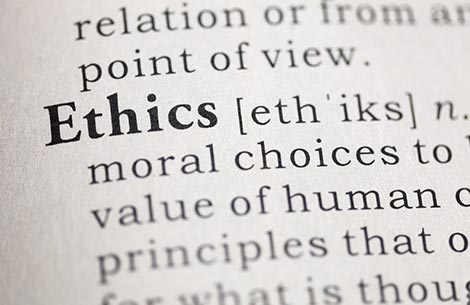
Ethics is the branch of philosophy dealing with values relating to human conduct, with respect to the rightness and wrongness of certain actions and to the goodness and badness of the motives and ends of such actions.

Organizations have ethical frameworks. Some formalize these into a documented “code of ethics” to which employees may or may not adhere. Others have commonly accepted ethical practices that aren’t documented, but are a pervasive element in the culture. What’s your situation at work?
 
Many individuals also have ethical frameworks. Their behavior is consistent with their beliefs. Do you have certain beliefs regarding appropriate ethical behavior at work?
Clarify your ethical beliefs
Indicate what you would do in each of the following situations:
 
1. If you see a colleague taking office supplies home, would you report this? Speak to your colleague?
2. Do you pad your expense account?
3. A talented employee is usually 15 minutes late every morning, but stays late to complete projects. Company policy states that wages should be deducted from employees who come late. As his superior, would you deduct his wages?
4. During lunch, a valued customer makes offensive racist remarks. Would you express your feelings of disapproval?
5. Your work requires making long distance calls. Do you also make personal calls if you know they can’t be traced?
6.  You’re in charge of hiring employees. Both a friend and a more qualified person apply for a position. Would you hire your friend?
7. A colleague at your company is stealing from petty cash. Would you tell him to stop? Tell your superior?
8. Your company does shoddy work. Would you tell a major client this if it could lead to company bankruptcy and   resulting unemployment?
9. Do you claim false experiences on your resume? During a job an interview? A signed statement?
10. As an employee of a retail organization, would you tell customers that a competitor sells certain products for less?
11. You’re company is bidding for a contract that will produce a good product but have a later delivery date than requested. Would you tell the truth?
12. You’re the CEO of a small airline company. The planes you possess have a known safety problem, but will last for five more years. Would you buy newer, safer planes?
13. You’re very competent and usually complete projects before colleagues who feel you show them up. Do you slow your productivity?
14. A subordinate or boss implies that there are work-related rewards tied to a favorable sexual response. Would you respond to the advance?  
15. I make long distance personal calls from my work phone.
 
Developing an ethical framework
What do your responses to the above questions say about your ethics? Under what circumstances do your ethical and unethical behaviors occur? How do these behaviors affect your job performance? Promotional opportunities? Interaction with colleagues, clients, or friends?
 
Write two or three sentences describing your ethical beliefs or framework. Review your company’s ethical framework.  Is your ethical framework compatible with that of your organization? If not, are you comfortable exercising your beliefs?
Share your ethical beliefs with a trusted co-worker, and give each other feedback regarding ways in which you can both enhance your workplace ethical behaviors.
Many professional associations and organizations ask potential member if they have you at any time been convicted of a felony, sanctioned by any professional ethics body, licensing board, or other regulatory body or by any professional or scientific organization. How would you respond to these questions?
Knowing your ethical beliefs as well as those of your organization and professional association enables you to work comfortably and with integrity. Can you do anything this week to enhance your ethical behavior at work?
 
Questers Dare to Change Your Job and Life by Dr. Carole Kanchier, offers additional tips for enhancing work ethics: https://www.amazon.com/Questers-Dare-Change-Your-Life/dp/1508408963

Share
Tips for Quitting Your Job

“I quit my job by email since that’s how I normally communicated with my boss. But I’ve been thinking that quitting by email may not be appropriate…!”

Have you had enough? Is quitting the right option? If so, resign with class. But first, know why you’re leaving.
 
Do you have patience with customers or co-workers? Are company policies and ethics congruent with your values? Do you have supportive superiors? Do you dread Mondays? Does your job meet important needs (e.g., work/life balance, challenge, variety)? Do you enjoy job tasks? Other?
 
Evaluate your current situation. List everything you like and dislike about your position. Also identify career successes. Review why you chose your job (e.g., salary, opportunity to use skills), and whether you still have these rewards. Note whether you’re committed to your employer, what you’ll gain by remaining with the company, and what you’ll lose if you leave. Determine whether non job-related factors (e.g., relationship, health) affect your attitude.
 
Examine all options. If you’re unhappy, consider personal vacation time to gain perspective. Think about transferring to another department in your organization, a different employer, a new field, self employment, or further education. Consider asking the company’s employee assistance provider (EAP) for assistance.
 
Talk to your supervisor. Share satisfiers, dissatisfiers, and possible solutions. Discuss reshaping your job to fit interests and talents.
 
Clarify your long term career goal, and state reasons for wanting it. Review the pros and cons of achieving your goals with this company.  
 
If you decide to leave the organization, resign gracefully.
 
Transitioning Tips
 
– Prepare financially. Save enough to survive a two month unemployment drought. Create a budget. Look at needs, not wants. Cut expenses. Use coupons, comparison shop. Reevaluate housing costs. Look for additional income sources such as temp work.

Check unemployment benefits. Quitting may disqualify you from collecting benefits that are often based on circumstances surrounding your departure. Consider the economy and the demand for your skill set.

– Know company policies regarding resignation letters. A few sentences indicating notice and termination dates usually follow the verbal notice.

Write a short, gracious, visually attractive, specific letter. In the first couple of lines, indicate your intention to resign and departure date. Appreciate your boss, colleagues and experiences. For example, state you thoroughly enjoyed implementing ABC project with your team, or selling the company’s product or services. Remind the company of your achievements. If you’re taking study leave, mention that, but don’t name your new employer. Proofread your letter and ask a trustworthy friend feedback..

Leave on good terms. Your boss should be the first to know. Schedule a face-to-face meeting.  Don’t fax or email your resignation. If your supervisor only visits your site every few months, ask for a meeting prior to her next site visit.

Get to the point. Give reasons for leaving. If your reasons are financial, give your employer a chance to make a competitive offer. Discuss entitlement to benefits. Stress the delights of having worked for the supervisor, whether delightful or not.  Focus on the positive, but give reasons for leaving. A new job may offer more promotional opportunities or better work hours. Time out for travel or study may rejuvenate you personally and professionally.

Be flexible regarding departure time and terms. Think in terms of a new reference. You’re behavior in the final days shapes others’ opinions. Tell colleagues after the official notice, but don’t discuss details. Maintain friendships
 
– Give sufficient notice. Follow company procedures. The standard is two to four weeks, but this depends on length of tenure. In some circumstances, such as ongoing harassment or physical threat, it’s justified to leave without notice, but. document complaints.
 
If your contract requires working for a longer time frame, discuss options with former and new employers. Your new employer may be willing to pay your current organization to get you sooner.  Negotiate the possibility of working weekends or evenings to complete projects.

Advise the new company of your requirement to give notice before starting. Employers usually respect your need to terminate with grace.
 
– Manage in-between time.  Tie up loose ends, organize files. If you have to train a replacement or hasten the completion of a project or task do so professionally, sincerely.
 
– Express appreciation. Keep negative feelings to yourself. Find something good to say.  For example, “I’ve really gained from the experience, and my colleagues meant a lot to me.”
 
– Prepare. Some companies require terminators to leave the company site immediately. Be prepared to remove personal belongings and files from your computer. Budget for the possibility of not receiving a paycheck.

– Plan for the exit interview. Many companies conduct exit interviews to pinpoint sources of employee dissatisfaction. Offer suggestions and feedback on how the organization can become more competitive and improve products or services.

Avoid career busters
Never quit the day before joining a new organization.
– Don’t resign on impulse.
– Keep your mouth shut. Don’t badmouth or trust anyone with negative information.
Don’t damage property or steal.
– Don’t feel guilty. Don’t mourn a job that no longer fits, or worry about what colleagues think.
 
Look forward to starting a wonderful new chapter of your life career!
 
Questers Dare to Change Your Job and Life, by Dr. Carole Kanchier, provides additional tips for getting, keeping, and quitting a job: https://www.amazon.com/Questers-Dare-Change-Your-Life/dp/1508408963.

Carole Kanchier, psychologist, coach, and speaker, may be contacted at: www.questersdaretochange.com.

Share

Conquering Conflict

June 5, 2018
Conquering Conflict
Are you frustrated with your boss or irritated at co-workers’ annoying habits? Do some customers’ behaviors infuriate you? How do you react in these situations?
                                   
In today’s workplace there are varied people with diverse perspectives and behaviors. Disagreements occur because people hear, see and interpret things differently. To resolve disagreements with people who have divergent perspectives, try the following.
 
Understand how unproductive thinking patterns develop
Because we are exposed to more input from our environment than we can assimilate, we classify the information into categories. This serves as the basis for making generalizations that help us define and understand our world. Generalizations are useful, if accurate.
 
Generalizations influence our assumptions, which in turn affect our understandings and relationships. They cause us to stereotype and prejudge people. “Older workers are set in their ways.” “Younger workers are irresponsible.” These stereotypes may be true sometimes, but not always. Individuals with rigid stereotypes usually don’t alter their views when they meet people who don’t fit the mold.
 
Question your assumptions and stereotypes
Your partisan lenses often determine how you view others. Do you pigeonhole people to expect certain behaviors because of age, color, ethnicity, or other characteristic?  Do you put labels on your enemies?
 
Ask questions to identify your assumptions and establish a sound basis for future communication. How valid are the conclusions you’ve drawn? Are they based on research? To what extent do they color your experience?
 
Note how you stereotype people. Most people are complex. Understand their viewpoints so that you’re not surprised when they express them.  Enjoy each others’ differences.
 
Since you learned false stereotypes, you can unlearn them. Replace stereotypes with attitudes based on sound research. Understand and communicate with those who look, act and talk differently. View conflict as a normal process which can enrich your life.
 
Develop productive behaviors
Acknowledge that a conflict in a relationship may be partially due to your unfounded assumptions. Here are some conflict resolution skills suggested by Jack Hamilton and Elisabeth Seaman of C P & R Services and other experts.
1. Be assertive. State your perceptions, share your thoughts and feelings, and make your needs and desires clear. Colleagues may not know that your unfriendliness is due  to a tight deadline
Watch your body language. For example, when speaking to others, maintain eye contact. This conveys honesty and confidence.
 
Stick to the facts. Avoid words like “always” and “never.” These seldom describe reality and often elicit defensive reactions. Make specific request rather than complaints.
 
2. Be tolerant, understanding. Are you annoyed at co-workers’ incompetence? Are you hypercritical of others? Respect others and value their opinions. Respect is a key ingredient in nourishing relationships. It requires trust, equality, empathy, and connectedness in all kinds of relationships. Recognize the dignity, worth and humanity in all people.
 
3. Listen. Conflict accelerates when people don’t feel heard. Listen to what people are really saying. Consider their viewpoints carefully without defensiveness.
 
Try to understand the message even if you disagree. Pay attention to what is said without interrupting, judging or offering solutions or ideas. Ask questions when you’re not clear about something. This will enable you to get more information and demonstrate your interest and concern. “Please tell me more about that.”
 
Summarize what you hear the person say to correct misunderstandings. Let the person know you hear the emotional content of the message. Listen between the lines. What’s the person feeling but not saying?
 
4. Share your thoughts with the person.  Discuss the factual basis of each other’s thoughts to learn new truths and get a different interpretation of words spoken or actions taken. Give merit to another’s view until you can validate its accuracy. Then change your view if new information proves you wrong.
 
5. Agree on a solution after developing a factual understanding of the assumption that lead to the conflict. Think of creative ways to deal with conflicts. Act on those that are valid.
 
Continue to learn
Read books, view or listen to audio or video tapes that address interpersonal issues. Take courses to enhance communication skills. People skills are crucial for most jobs. Greater understanding and acceptance of others will enable you to resolve day-to-day differences smoothly and be a happy, productive person.
 
Questers Dare to Change Your Job and Life by Dr. Carole Kanchier offers many tips for conquering conflict: https://www.amazon.com/Questers-Dare-Change-Your-Life/dp/1508408963

Share